The quiet rise of passkeys: Why your next login may not need a password
Tech companies have been promising a password-free future for a decade. This time, the numbers suggest it is actually happening.
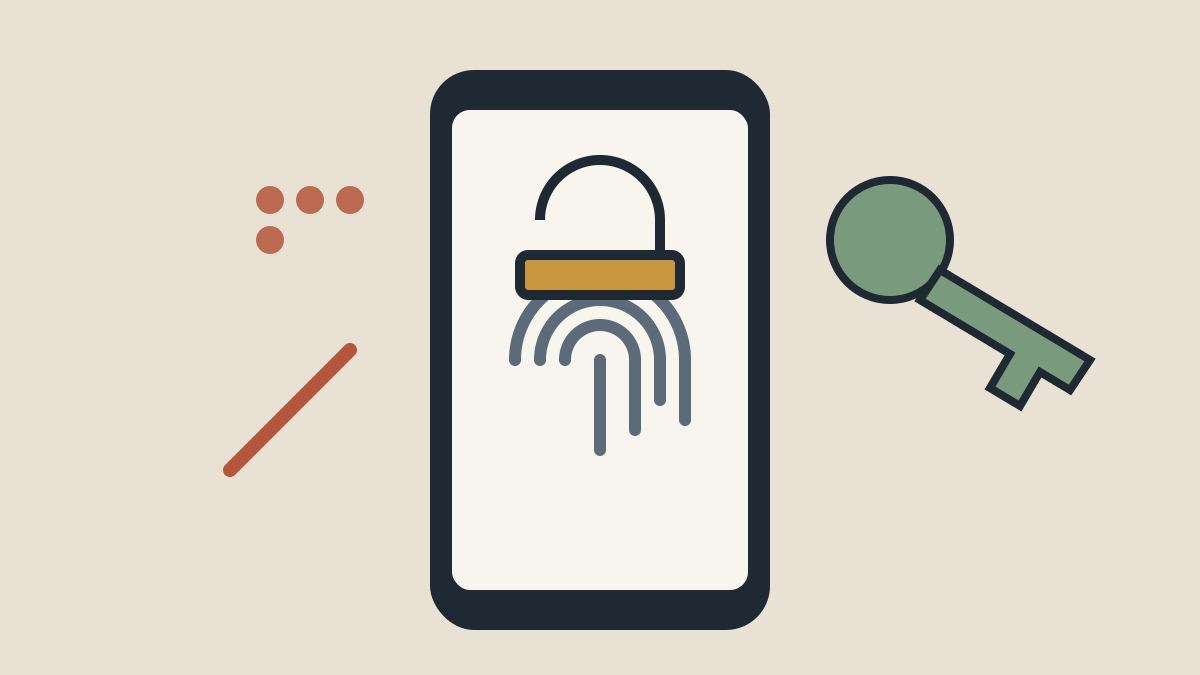
For as long as most people have been online, logging in has meant remembering a password — or, more often, reusing one. That ritual is slowly being replaced by something most users barely notice: a prompt to confirm with a fingerprint, a face scan or a device PIN.
These prompts are powered by passkeys, a login standard developed jointly by major technology companies. Instead of a secret that users type and websites store, a passkey relies on a pair of cryptographic keys. One stays on the user’s device; the other is held by the website. Logging in proves possession of the private key without ever sending it anywhere.
Why it matters
Passwords fail in predictable ways. They are guessed, reused, phished and leaked in data breaches. Security researchers estimate that a large majority of account takeovers involve stolen or weak passwords.
Passkeys are resistant to most of those attacks. Because the private key never leaves the device and is tied to a specific website, a convincing fake login page cannot trick a passkey into working. And because websites store only a public key, a breach of the site’s database does not expose anything an attacker could use to log in elsewhere.
“It’s the first login technology that is both more secure and easier to use,” said a security researcher who has studied adoption. “Usually you have to pick one.”
Adoption is accelerating
For years, passkeys were available but rarely used. That has changed. Several large banks, retailers and email providers now offer passkeys by default during account creation, and the major smartphone and computer operating systems sync them across a user’s devices.
Industry data released this fall suggested that billions of accounts now have a passkey enabled, and that users who adopt them are significantly less likely to reset their credentials or abandon a login.
Not without friction
Challenges remain. Users who switch between ecosystems — say, from one phone maker to another — can find moving passkeys confusing. People who share accounts with family members must learn new ways to grant access. And many smaller websites have yet to implement the standard at all.
Accessibility advocates have also urged companies to ensure that biometric prompts have reliable alternatives for users who cannot use fingerprint or face recognition.
What to do now
Security experts recommend that people enable passkeys wherever they are offered, starting with email and financial accounts, and keep at least one backup method — such as a second device or a hardware security key — in case a phone is lost.
The password is unlikely to disappear entirely anytime soon. But for a growing number of people, it is becoming something they type only when something goes wrong.